1
Three quick questions
Its job, Today and Still failing. Plain words are fine, and only the first is required.
Separate what the prototype demonstrates from what is still assumed, then choose the next practical test.
A sentence or two is enough. Plain words are fine.
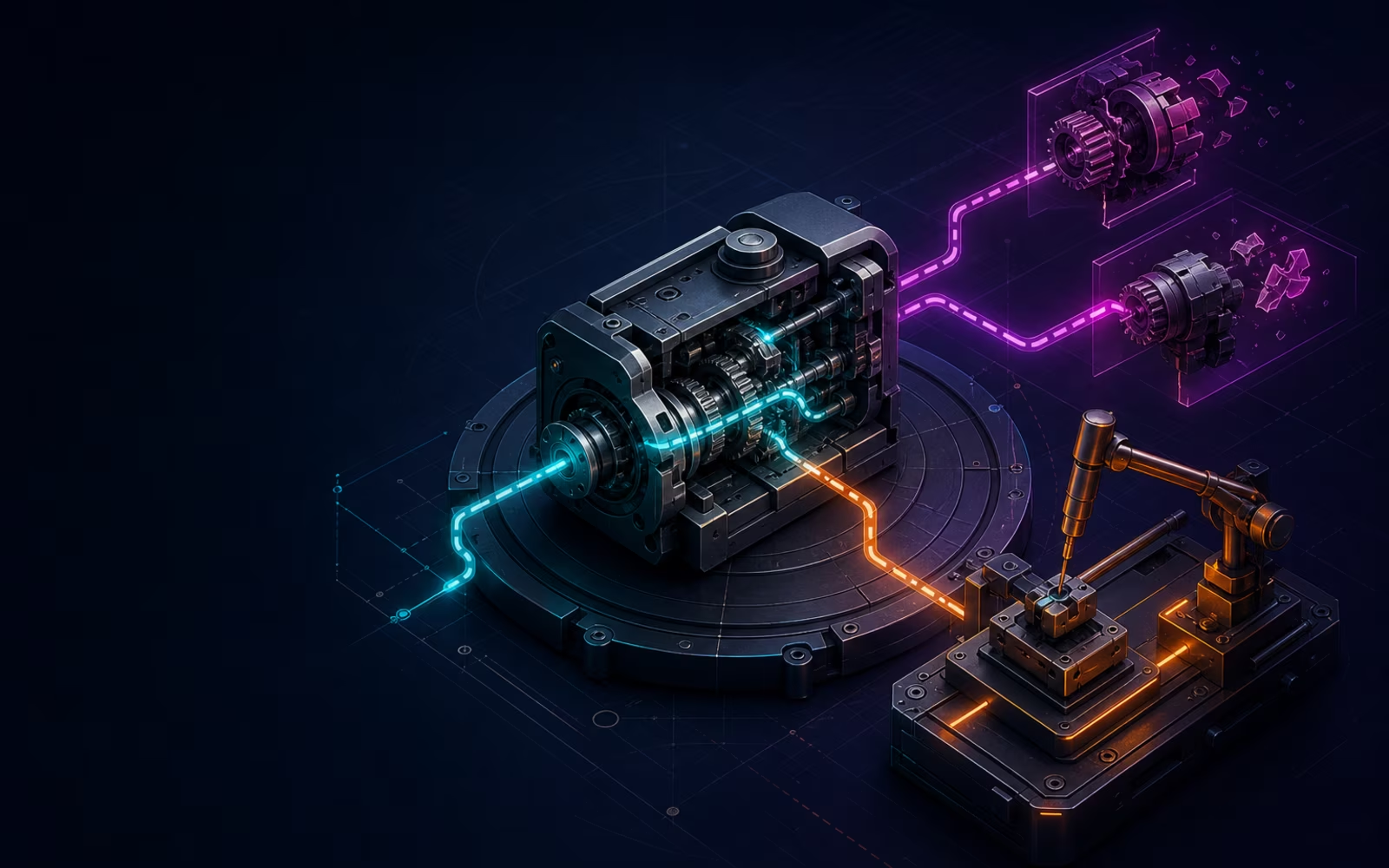
Its job, Today and Still failing. Plain words are fine, and only the first is required.
For this page: what looks promising, what may stand in the way, and what would make the idea stronger.
When you are ready, Nova looks at success criteria, how it works, the parts, the constraints and the resources.
Everything on this page is temporary and anonymous. A free account keeps it, with no card and no end date, and opens much more to do with it. Sign up with Google or email.
This page, this visit
Free for as long as you use it
When you need more
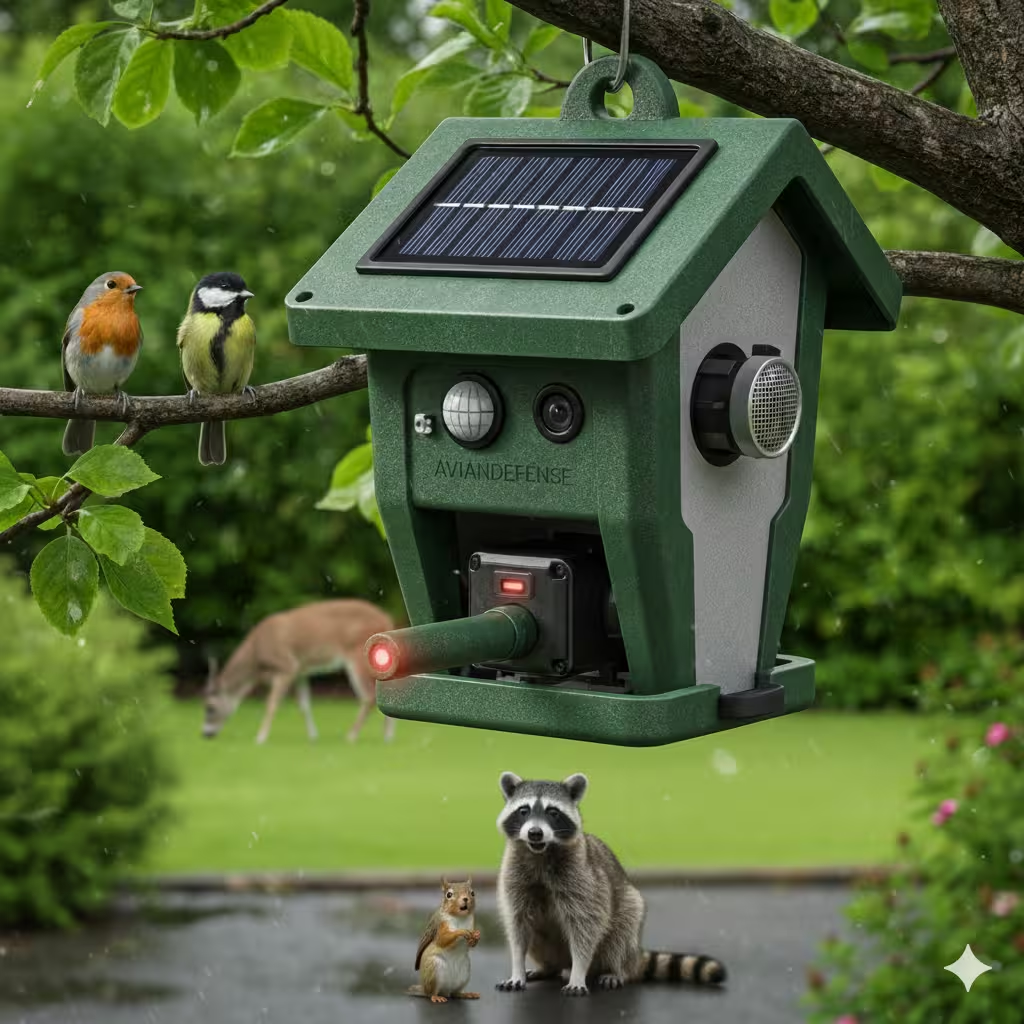

Studio writes the physical description from what you kept, and marks what it had to assume.
A formal view and an in-use view, made from that description. Free with an account.
A clear picture gets better feedback from customers, partners and teachers than a paragraph does.
With an account, Nova matches your idea against more than 1,100 expert profiles and seats three who see it differently. Each keeps a view of what is strong, what is weak and what to try next.
Nova examines intended use, working mechanism, demonstrated behavior, unresolved failures, manufacturability, and user handling without overstating readiness.
No. Start now in a temporary, anonymous space. Create a free account when you want to keep what you have made.
No. It has no card and no end date, and it stays free for as long as you use it. A membership is optional and adds more.
With Google or with email and a password. We recommend Google: one click, no new password, and Google protects the sign-in.
No. Nova gives an early orientation and helps you decide what to look at next. It does not replace a patent attorney or a full search.
Three quick questions, then Nova answers yours. Keep it with a free account when it is worth keeping.